Fasting, Reiki and Spiritual Connection
What did Usui, Jesus, Mohammed and the Buddha all have in common?
No its not the start of a a joke ... They all practised fasting for prolonged periods that resulted in spiritual experiences.
I fast from time to time. In all honesty, probably not as much as I should.
There is something about fasting that has always fascinated me. I used to fast on Ekadashi, a practice I learned through yoga. Ekadashi is the eleventh day of each lunar fortnight in the Vedic calendar, so it occurs twice during each lunar month. Traditionally, it is observed as a day of fasting, prayer, discipline and turning the attention inward. The purpose is not simply to go without food, but to cultivate self-discipline and bring the mind and senses under greater control.
I notice something interesting when I fast. Against all logic, I have more energy, not less. My mind becomes clearer and my meditation practice becomes much deeper. There is less mental chatter, and I experience a greater sense of connection.
Of course, this is my personal experience, and fasting will not necessarily feel the same for everyone.
But as a Reiki Teacher, I have become increasingly fascinated by the relationship between fasting, meditation and spiritual practice.
Why does fasting appear so often in the stories of spiritual seekers?
One of the reasons I started thinking more deeply about fasting was the story of Mikao Usui, the founder of Reiki. The traditional Reiki account tells us that Usui went to Mount Kurama in Japan, where he undertook a 21-day spiritual discipline involving fasting and meditation. According to the inscription on the memorial stone erected by his students after his death, after 21 days without eating, Usui experienced what the inscription describes as a great Reiki over his head, attained enlightenment and obtained Reiki Ryoho.
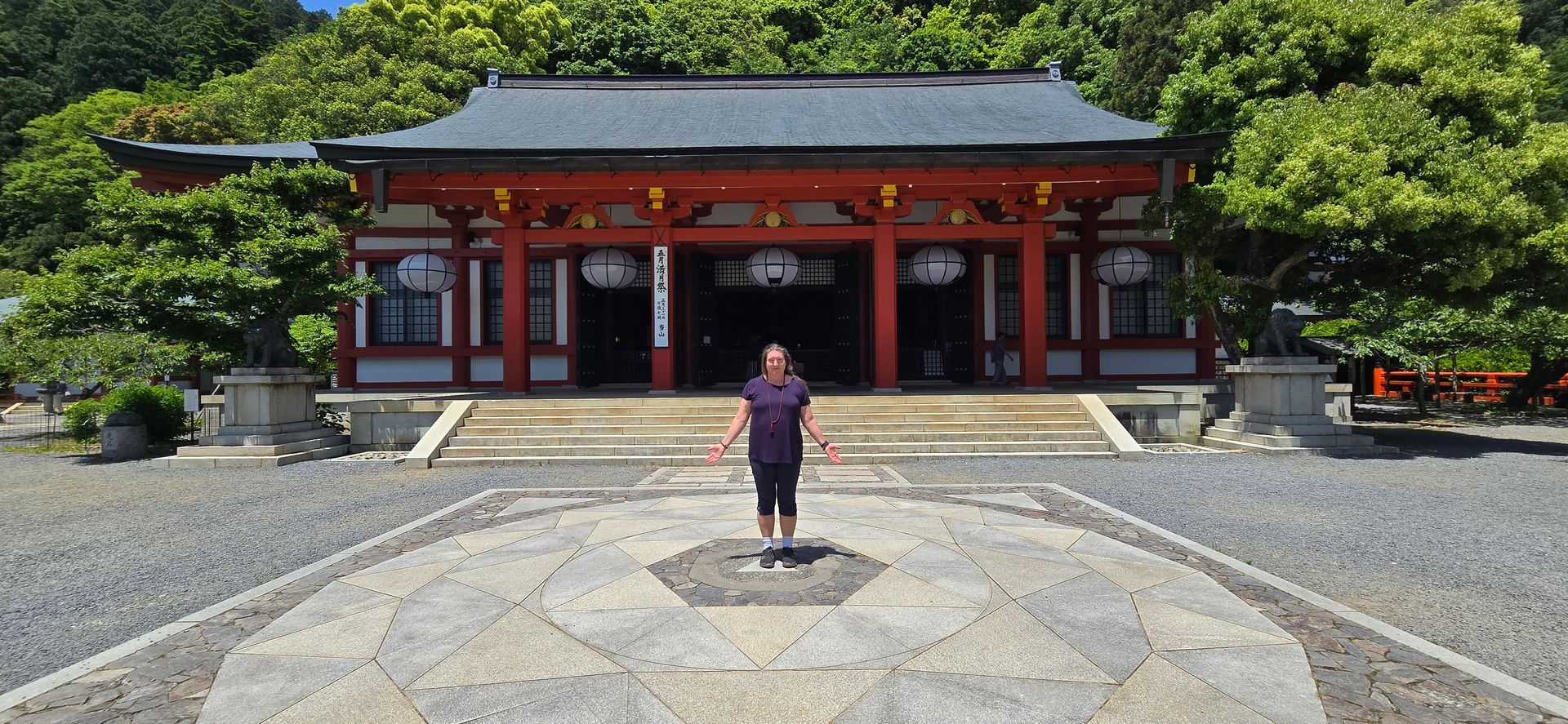
I visited Mt Kurama earlier this year (read about it here) and began thinking Mikao Usuis experience and about other spiritual seekers in history who all had great revelations or experiences when fasting.
Throughout history, people from very different spiritual traditions have deliberately stepped away from food as part of a deeper search for clarity, connection, revelation or transformation. Here are a few of them:
- Jesus - In the Christian tradition, Jesus spent 40 days fasting in the wilderness before beginning his public ministry. His fast was accompanied by profound spiritual testing and contemplation. Catholics today remember this during Lent in the lead up to easter, most don't actually fast anymore but rather give up something for 40 days.
- Moses - In the Hebrew Bible, Moses spent 40 days and 40 nights fasting on Mount Sinai, where he received the commandments.
- The Buddha - The story of Siddhartha Gautama, the Buddha, is particularly interesting because it offers a different perspective. Before his enlightenment, Siddhartha spent years practising extreme asceticism. This included severe restriction of food and fasting. He became so physically weak that he eventually realised that extreme self-denial was not the answer. He accepted food, regained his strength and followed what became known as the Middle Way, avoiding both indulgence and extreme austerity.
- Muhammad - The Prophet Muhammad would retreat for periods of prayer and contemplation in the Cave of Hira, and it was during one of these periods of retreat that, according to Islamic tradition, he received the first revelation of the Qur'an. Fasting later became one of the central practices of Islam through Ramadan, a month devoted not only to abstaining from food and drink during daylight hours, but also to prayer, reflection, self-discipline and devotion.
- Mahatma Gandhi - Gandhi grew up observing Ekadashi fasts, although he wrote that initially he did this largely because his mother did. Later, fasting became a much more conscious spiritual practice for him. He regarded it as a form of self-restraint and spiritual discipline.
- .St Francis of Assisi - Francis embraced a life of simplicity, prayer and fasting. He regularly used fasting and periods of solitude as spiritual disciplines, seeking a deeper relationship with God.
- Rumi - The great Persian poet and Sufi mystic wrote extensively about fasting, hunger and spiritual longing. Within the Sufi tradition, fasting was a way of disciplining the body and creating space for a deeper connection with God.
- Paramahansa Yogananda - Yogananda taught fasting as a spiritual discipline, connecting it with self-control, meditation and turning the attention inward. He believed that giving the body a rest could help quieten the mind and deepen meditation.
So What Is It About Fasting?
I don't think fasting is a magic formula for having a spiritual experience. And I certainly don't think that the longer you fast, the more spiritually advanced you become. The story of the Buddha alone challenges that idea.
But perhaps fasting creates a particular kind of space. When we aren't constantly eating, digesting, thinking about food or following our usual routines, something changes. There can be a simplicity to the day. The body becomes quieter. The mind can become more focused.
I feel that is the key because we spend so much of our lives adding things: more food, more information, more stimulation, more activity, more doing Fasting asks us to do the opposite - it takes something away.
When we remove food we create the opportunity for something else to fill this space, a completely different experience. And perhaps, in that space, there is an opportunity to hear something we couldn't hear before.
Sometimes, perhaps, the most profound experiences come not from adding something new, but from creating enough space to notice what was already there.
A note on fasting: Fasting is not suitable for everyone, and prolonged or restrictive fasting can carry health risks. This article is about my personal experience and the spiritual traditions surrounding fasting, not medical advice. If you are considering fasting, particularly for extended periods, it is important to seek appropriate professional guidance.
______________________________________
Sirpa Gunn is the founder of Soul Tree, a Reiki Master Teacher, Yoga Alliance 500-hour experienced teacher and Yoga Alliance CPD provider based in New Zealand.