Learning Reiki from a Japanese Master
What I Learned about Reiki from my time with Hyakuten Inamoto
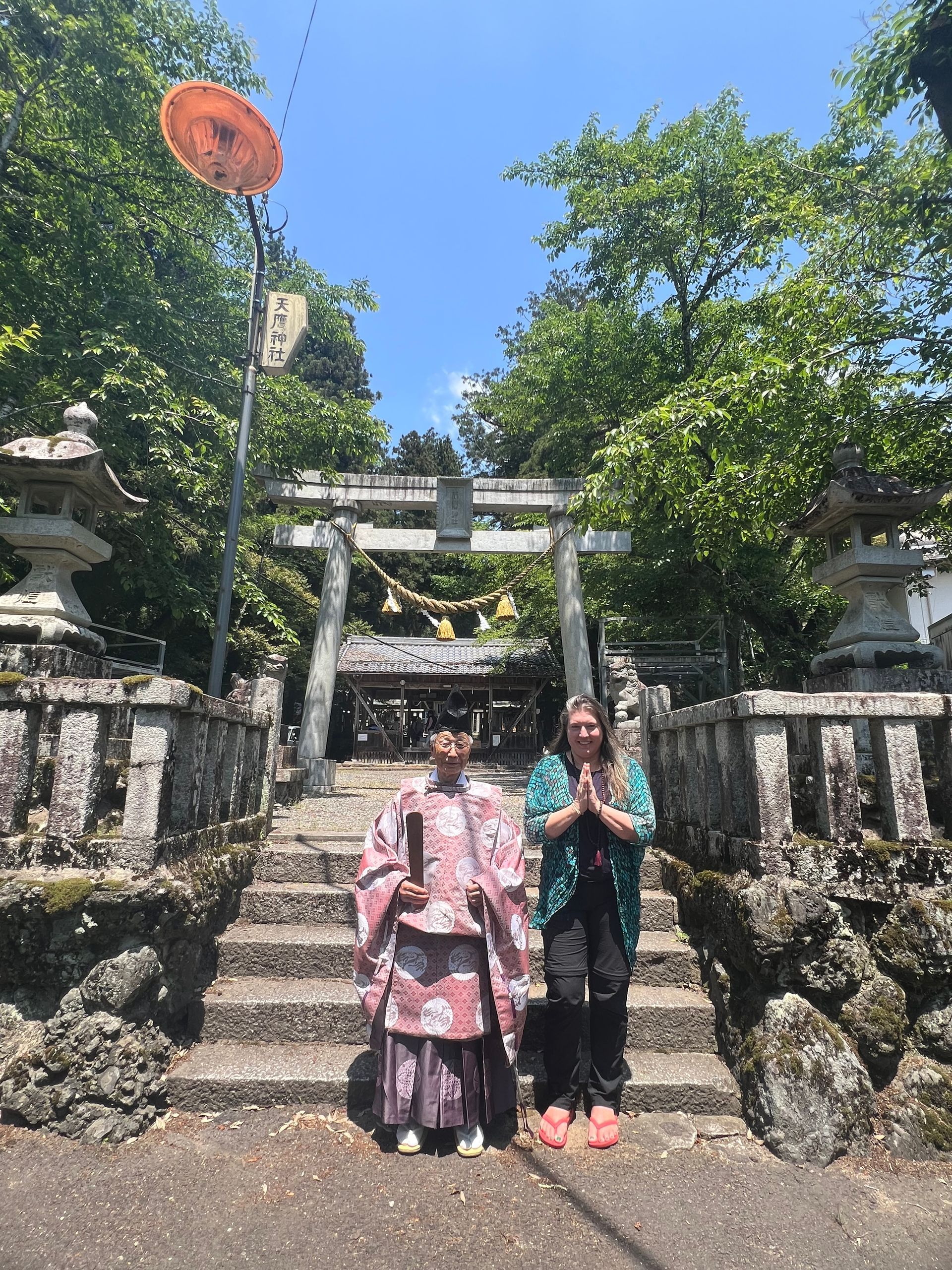
In October 2023 I had the opportunity to resit all the Usui Reiki levels with Hyakuten Inamoto. Over a week in Melbourne we covered: Shoden (level 1), Chuden (Level 2), Okuden (level 3) and Shinpinden (Reiki Master). These are not usually taught back to back in a week, however this course was specifically for existing Reiki Masters only. It gave us the opportunity to spend time with Inamoto Sensei and learn his Komyo ReikoDo method.
Inamoto, is a Japanese Pure Land Buddhist monk who founded Komyo Reiki Do in 1998, his lineage traces back directly to Mikao Usui the founder of Reiki Ryoho.
- Usui taught Chikuro Hayashi, who went on to establish the Hayashi Reiki Kenkyu-kai.
- Hayashi then taught Chiyoko Yamaguchi,
- Yamaguchi became
Hyakuten Inamoto' s teacher.

There were some major differences between what I had learned in the West and the way Reiki is practised within Komyo ReikiDo. There were also some new personal discoveries for me. These are some of my main takeaways.
Reiki is an Act of Surrender
The most important takeaway from my time with Inamoto Sensei is that Reiki is an act of surrender. I have pondered this a great deal since my time with Sensei, and I have realised that we need to let go of the drive to do more and be more.
The further away we can get from our ego, the purer the Reiki will be. Our ego constantly tempts us to think that we are doing something, that we are responsible for the healing. In Reiki, we need to put that ego aside.... Place your hands and surrender.... Just let the Reiki flow.
The Japanese Way is Far Simpler
I think in the West we tend to overcomplicate everything, whereas the Japanese approach is much more minimalist.
The Reiki taught by Inamoto Sensei was far simpler than I expected, and this simplicity was what made it so powerful. In the West, we often incorporate crystals, sound, chakras, oracle cards, readings, etc., but there is none of this in the Komyo ReikiDo method. None of these are necessary. Reiki alone is powerful enough. We just need to trust it.
Consent
When I originally learned Reiki, I was taught that you should never give Reiki without consent. The Komyo ReikiDo method does not place the same emphasis on this. Within this approach, it is quite okay to send Reiki without consent.
This was one of the main differences that conflicted with what I had previously been taught.
The Symbols
Some of the symbols were quite different in Komyo ReikiDo. This has created a bit of a dilemma for me. Do I continue to teach the symbols I was originally taught, that appear in all the mainstream Reiki books, or do I adopt the Japanese ones?
In the end, a symbol holds power, but so too does the intent when you are using it, so I decided not to get hung up on it or overthink this.
The Power of Words: Kotodama
One of the things I had never really considered in relation to Reiki was Kotodama, the power of words. Inamoto Sensei shared such beautiful insights into the Japanese language, giving me insight into the deeper meaning of the names of some of the symbols, as well as the word Reiki itself. It opened up a whole new way of looking at the words we use within the practice and their deeper meaning.
While I wont share his content here I would like to say that it is well worth attending one of his courses just for these insights!
The Power of Gasho
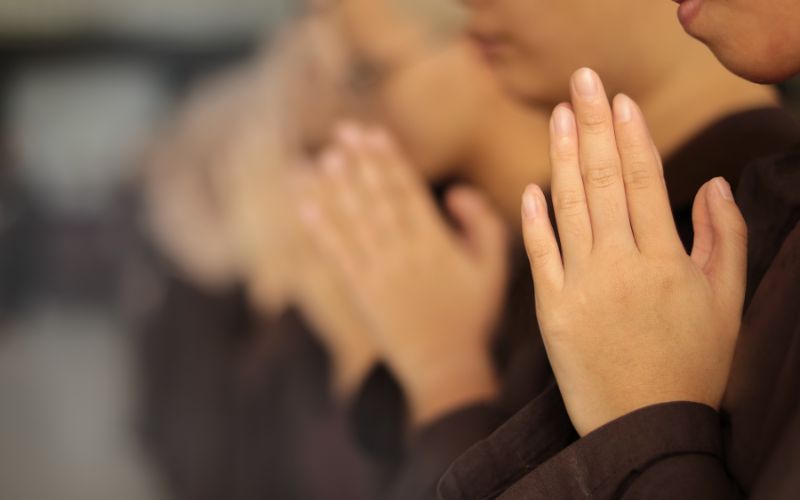
Another profound experience for me was Gasho. It is a mudra that I use in my yoga practice, however, I have never had to maintain it for such a long period of time, and the effects were quite startling.
Inamoto Sensei offered us Reiju for each of the four levels. With around 30 students, the process took many hours. We sat quietly, hands held in Gasho, waiting for our turn.
I felt like I entered an alternate reality where time stood still, awareness of everything was heightened and a glimpse of my true self was revealed.
Ok, maybe the attunement had something to do with it too.... but just sitting there with palms together gave the attunement an opportunity to be fully received and processed.
The Practice of Bowing
There is a lot of bowing involved in Japanese Reiki, particularly when giving Reiju. Of course, bowing is very much part of Japanese culture, but I think it is such a beautiful practice to include in Reiki.
A bow is more than simply a gesture of respect or greeting. For me, it is about truly acknowledging and honouring the person in front of you. There is something very meaningful about taking a moment to consciously recognise the other person in this way.
I have incorporated bowing into my own Reiki practice too, and it has added another beautiful layer of respect and presence to the practice.
The Physical Techniques
Then there are the physical techniques. It came as quite a surprise to me that the Japanese way includes pressing, stroking, patting and even a full-body treatment. This type of physical touch was never taught in the Western courses I studied. They felt very right, though, and I have incorporated many of them into my own practice of Reiki.
It was such a privilege to learn from Inamoto Sensei and to experience his approach to Reiki firsthand. I am very grateful for the time, knowledge and insights he shared with us. I hope to have the opportunity to return and train with him again in the future.
Please note: This is my personal experience, not necessarily what is taught by Inamoto Sensei or Komyo ReikiDo. I have shared my experiences rather than his philosophy or teachings (as those are not mine to share), I highly recommend attending one of his courses to learn more!
______________________________________
Sirpa Gunn is the founder of Soul Tree, a Reiki Master Teacher, Yoga Alliance 500-hour experienced teacher and Yoga Alliance CPD provider based in New Zealand.